Tag: Katan silk saree

  • Banaras: The Silk City & Its Timeless Weaves

    Introduction: The Legacy of Banaras in Indian Weaving
    Banaras, also known as Varanasi, is not only a spiritual center but also the heart of India’s silk weaving heritage. The city is globally renowned for its luxurious Banaras silk sarees that reflect rich tradition, intricate craftsmanship, and timeless elegance. Every Banaras silk saree carries centuries of artistry and pride.

    What Makes Banaras Silk Sarees Special?
    The banaras silk saree is crafted using high-quality pure silk threads with gold or silver zari, making it one of the most sought-after Indian ethnic garments. These sarees are known for:

    • Rich & vibrant colors
    • Intricate motifs like paisley, floral, and Mughal patterns
    • Heavy pallu and ornate borders
    • Lustrous texture and durability

    The Art of Banaras Saree Weaving
    Banaras saree weaving is a labor-intensive craft. Skilled artisans, often from generations of weaver families, spend days or even weeks on a single saree. Traditional techniques such as handloom weaving and kadwa (brocade) weave make each saree unique.

    Types of Banaras Silk Sarees to Explore

    1. Katan Silk Sarees – Known for their smooth finish and solid color base with zari work.
    2. Organza Banarasi – Lightweight yet elegant, ideal for modern brides.
    3. Shattir Banaras Sarees – A modern twist to traditional silk weaves.
    4. Georgette Banarasi – Popular among young women for weddings and festivals.

    Banaras Silk in Modern Fashion
    Today’s designers and influencers love incorporating Banaras silk in contemporary fashion. From lehengas to jackets and dupattas, banaras silk sarees are being transformed into modern masterpieces, making them a wardrobe essential for weddings and festive occasions.

    How to Style a Banarasi Silk Saree?

    • Pair with a deep V-neck blouse or high-neck collar design
    • Accessorize with temple jewelry or kundan sets
    • Drape it in seedha pallu style for a traditional touch

    Tips for Caring for Your Banaras Silk Saree

    • Always dry clean to maintain the zari shine
    • Store wrapped in muslin cloth
    • Avoid hanging; gently fold along zari lines

    Conclusion: A Timeless Weave That Transcends Trends
    A Banaras silk saree is more than a garment—it’s a story of tradition, passion, and heritage. Whether you’re a bride or a saree enthusiast, a piece of Banarasi silk is a treasure to cherish for generations.
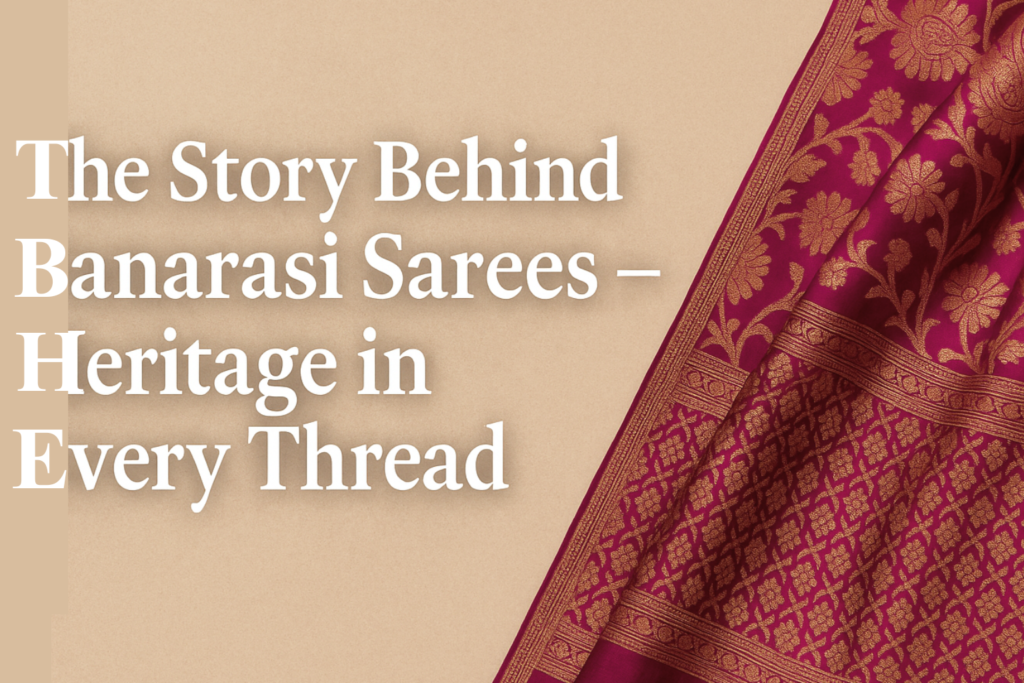
  • The Story Behind Banarasi Sarees – Heritage in Every Thread

    When it comes to timeless elegance and rich tradition, Banarasi sarees remain a crown jewel in Indian ethnic fashion. Originating from the ancient city of Varanasi (Banaras), these sarees are more than just clothing—they are handwoven works of art, passed down through generations. In this blog, we’ll explore the fascinating history, cultural significance, and modern-day relevance of Banarasi sarees.

    Origin of Banarasi Sarees: A Glimpse into History

    The roots of the Banarasi saree date back to the Mughal era, when Persian aesthetics met Indian craftsmanship. It was during this time that the art of weaving fine silk with gold and silver threads took shape in Banaras. Royal families and nobility adorned themselves with these luxurious garments, making Banarasi sarees a symbol of royalty and sophistication.

    What Makes a Banarasi Saree So Special?

    1. Intricate Weaving Techniques
      Banarasi sarees are known for their brocade work—delicate patterns created using metallic threads. Traditional motifs include floral designs, paisleys, peacocks, and mughal-inspired patterns.
    2. Pure Silk & Zari Work
      Woven from pure Katan silk and real zari (gold/silver threads), authentic Banarasi sarees are heavy, luxurious, and deeply ornate. Today, zari is often made with silver or copper threads coated in gold polish to maintain affordability without compromising beauty.
    3. Handcrafted by Skilled Artisans
      Each Banarasi saree can take 15 to 30 days or even more to complete, depending on the intricacy. Weaving one saree is a labor of love, often involving multiple artisans.

    Types of Banarasi Sarees You Should Know

    • Katan Banarasi Saree – Pure silk, known for its durability and richness.
    • Organza Banarasi Saree (Kora) – Lightweight, sheer fabric with zari and silk patterns.
    • Georgette Banarasi Saree – Soft and flowy, perfect for modern silhouettes.
    • Shattir Banarasi Saree – Ideal for contemporary and budget-friendly styles.

    Why Banarasi Sarees Are a Bridal Favorite

    If you’ve ever attended a North Indian wedding, you’ve likely seen the bride in a rich red or maroon Banarasi saree. This traditional attire is chosen not just for its beauty, but for its auspiciousness and timeless appeal. In fact, many brides today are opting for customized Banarasi lehengas and sarees to add a traditional touch with a modern twist.

    Modern Styling Ideas for Banarasi Sarees

    • Pair with a Belt: Cinch the waist with an ethnic belt for a fusion look.
    • Statement Blouse: Experiment with deep backs, balloon sleeves, or mirror work.
    • Contemporary Drapes: Try dhoti or lehenga-style drapes for pre-wedding events.
    • Accessorize Well: Go minimal with jewelry if the saree is heavily embellished.

    Preserving the Legacy of Banarasi Sarees

    In today’s fast-fashion world, Banarasi sarees remain a sustainable and ethical fashion choice. Buying a handwoven Banarasi saree not only supports Indian artisans but also helps preserve centuries-old traditions.

    Several designers and fashion influencers are now working with Banarasi weavers to bring their work into mainstream fashion, blending tradition with innovation.


    Conclusion

    Banarasi sarees are not just garments—they are a celebration of Indian culture, history, and craftsmanship. Whether you’re a bride, a saree enthusiast, or someone looking to invest in a piece of heritage, owning a Banarasi saree means owning a slice of India’s glorious textile tradition.