Tag: Indian textile heritage

  • What are some brands offering traditional handloom sarees in India?

    💫 Handloom Sarees – Stylish Form of Desi Parampara

    Even in today’s era of fast fashion, the charm of traditional handloom sarees is something else. These sarees have a unique combination of art, culture, and craftsmanship. There are some trusted brands in India that make original handloom sarees, promote the work of artisans and keep our heritage alive.

    If you are also a handloom lover, then this blog is for you. Here you will find the list of the best Indian brands that offer authentic handloom sarees.


    🛍 1. Nalli – The Royal Name of Handloom

    Nalli has been celebrating the handloom weaving tradition of South India for 90+ years.

    Specially known for Kanchipuram silk, cotton handloom and Banarasi weaves.

    Online + Pan India stores available

    www.nalli.com

    ,

    🛍 2. Ritu Kumar – Fusion of Fashion and Tradition

    Famous designer Ritu Kumar’s collections include heritage handloom sarees with a modern twist.

    Handblock, Zari, Chanderi, and vintage prints

    Perfect for festive & formal wear

    ,

    🛍 3. Fabindia – Har Ghar Ka Handloom

    Fabindia sells cotton, silk and tussar handloom sarees with direct support of artisans.

    Affordable + sustainable

    Pan India stores + online shopping

    www.fabindia.com


    🛍 4. Raw Mango – Luxury Handloom Sarees

    By designer Sanjay Garg, Raw Mango is a premium label that reinvents chanderi, benarasi and mashru handlooms.

    Rich colours, gold zari, minimal yet regal designs

    Ideal for weddings and luxury gifting


    🛍 5. Rehwa Society – Maheshwari Handloom ka Pratinidhi

    MP based Rehwa Society is an NGO that supports the weavers of Maheshwar.

    Maheshwari silk-cotton sarees with classic motifs

    Social impact + premium product

    www.rehwasociety.org


    🛍 6. Chanderiyaan – Digital Se Desi Kala Tak

    Supported by Digital Empowerment Foundation, Chanderiyaan promotes artisans-made Chanderi sarees.

    Available via online portal & exhibitions

    Perfect example of “Digital India meets Handloom India”


    🛍 7. Bunkar – Weavers Ka Apna Brand

    Bunkar has a mission to take handloom sarees to the mass market.

    Banarasi, Cotton, and Chikankari sarees

    Elegant + affordable pricing

    Available online across platforms

    ,

    🛍 8. Taneira – Handloom Brand of Tata Group

    Taneira by Tata Group is a modern platform of handwoven sarees.

    State-wise collections: Bengal, Assam, Chhattisgarh, Tamil Nadu

    Sustainable packaging + detailed craftsmanship

    www.taneira.com

    ,

    🛍 9. Digital Empowerment Foundation – Tech + Weaves

    This foundation has given training, design and digital reach to artisans.

    Crafts like Chanderi, Bagru, Bhagalpur are promoted.

    Collaborates with NGOs & brands for handloom outreach
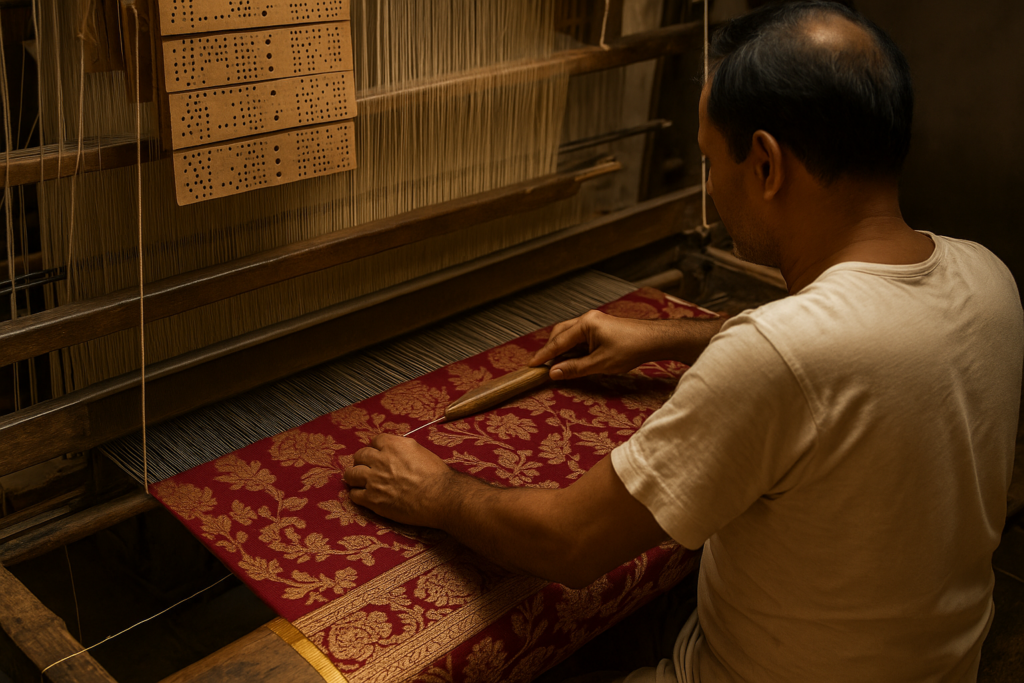
  • The Banarasi Saree Manufacturing Process – From Loom to Legacy

    Banarasi sarees, cherished for their luxurious silk and exquisite zari work, represent the finest of Indian handloom artistry. But what truly makes a Banarasi saree so special lies in its intricate manufacturing process—a journey that blends tradition, craftsmanship, and cultural heritage. In this blog, we walk you through each step of how a Banarasi saree is made.


    1. Sourcing and Preparing Raw Silk

    The process begins with sourcing pure silk yarns, primarily from southern India. This silk is thoroughly washed and degummed to ensure it’s free from impurities, giving it a smooth, lustrous finish. Only the finest Katan silk is used for traditional Banarasi sarees.


    2. Designing the Pattern (Naksha Making)

    Once the silk is ready, artisans begin designing the motifs on graph paper using traditional methods. This process is called Naksha making, and the designs usually feature:

    • Mughal-inspired patterns
    • Floral and foliate motifs (kalga, bel)
    • Peacocks, paisleys, and mandalas

    Each design is unique and may take days to finalize.


    3. Punch Card Creation for the Jacquard Loom

    The finalized design is translated into punch cards—small cardboard pieces with holes punched to guide the loom’s movement. These are fed into a Jacquard loom to control the weaving of patterns row by row.

    Thousands of punch cards are used for a single saree design.


    4. Dyeing the Silk Yarns

    The silk threads are then dyed in vibrant colors as per the design requirement. Traditional methods use natural and azo-free dyes, ensuring eco-friendliness and brilliance of color.


    5. Weaving on the Handloom

    Weaving is where the real magic begins. The weaver, assisted by family members or co-artisans, interlaces the dyed silk threads with zari threads (gold or silver-coated) on the loom. This meticulous weaving process can take 15 to 45 days or more, depending on the intricacy of the design.

    Types of weaving include:

    • Jangla – Dense floral motifs
    • Tanchoi – Intricate patterns with no zari
    • Cutwork – Simplified floral patterns
    • Butidar – Small, repetitive motifs across the body

    6. Finishing Touches and Quality Checks

    After weaving, the saree undergoes:

    • Polishing with a roller to enhance shine
    • Cutting and finishing of loose threads
    • Final quality inspection for defects

    Once approved, the saree is ready to be packed and shipped.


    7. Artisan Legacy and Sustainability

    Each Banarasi saree is a product of generations of skill. Many weavers work within family-owned units, often combining heritage techniques with modern innovations. Supporting Banarasi sarees also means supporting sustainable and ethical fashion.


    Conclusion

    From the hum of the loom to the shimmer of zari, the manufacturing process of Banarasi sarees is a beautiful narrative of craftsmanship and culture. Each thread tells a story, making every saree a wearable piece of art and tradition.

    Whether you’re a fashion lover, a bride-to-be, or an admirer of Indian textiles, knowing the process behind a Banarasi saree deepens your appreciation for this timeless attire.