Tag: Handloom Banarasi saree

  • How to Spot Genuine Banarasi Silk Sarees & Avoid Fakes

    💫 Introduction: Banarasi Saree – A Heritage That Shouldn’t Be Faked

    A Banarasi saree is not just a piece of cloth, it’s an emotion — from Lucknow to Delhi, every wedding features a Banarasi saree.
    But so many duplicates and powerloom copies have flooded the market that it’s become difficult to distinguish between the real and the fake.

    Today, we’ll learn some simple but powerful tips that will help you easily identify an original Banarasi silk saree.


    🪡 1. Check the Fabric – Pure Silk Has That Soft Glow

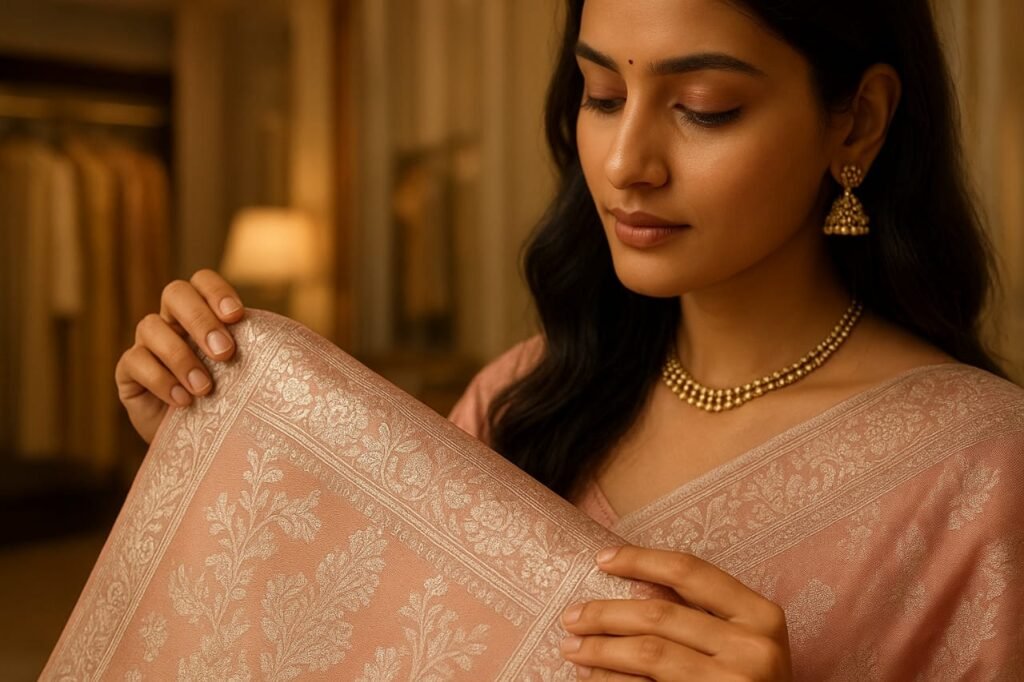
    Real Banarasi silk has a natural sheen, not a shiny, plastic-like look.
    You’ll understand it the moment you touch it — original silk feels slightly warm and is not slippery.
    Duplicate sarees are mostly made of synthetic or blended silk, which feels a bit stiff.

    💡 Pro Tip: Move the saree under the light — if the natural glow is soft, then it’s pure silk.


    🧶 2. Look for the Zari Test – Real Gold & Silver Touch

    The zari of a real Banarasi saree is made of pure silver and gold-plated thread.
    Fake zari is mostly plastic or polyester thread which has shine, but lacks grace.

    Home Test:
    Burn a small zari thread —

    If it smells like burning hair and leaves ash, then it’s real zari.

    If it smells like melted plastic, then it’s fake zari.

    (Note: Perform this test only on a small extra piece of zari, not on the saree itself!)


    🪔 3. Handloom Weaving Marks – Beauty of Imperfection

    Original Banarasi sarees are handwoven, which is why they have some unevenness — like thread marks on the back of the pallu, or slight variations in the design.
    Machine-made (powerloom) sarees are perfectly uniform, but that very perfection hides the originality.

    💬 “Perfection is often the sign of imitation.”


    🏷 4. Check the GI Tag & Certificate

    The government has given the Banarasi saree a Geographical Indication (GI Tag). Real handloom Banarasi sarees come with a Handloom Mark or a GI tag attached.

    Sarees with a GI tag can only be made by registered weavers in the Varanasi region.

    💡 Pro Tip: When buying online, check the description for “Handloom Mark” or “GI Certified”.


    🪭 5. Design Detailing – Traditional Motifs Speak Volumes

    The designs of Banarasi sarees are very specific —

    Kalga, Bel, Bootidar, Jhallar, and Shikargah motifs are the most classic.
    Fake sarees often have these designs distorted or in a printed version.

    Look and Understand: Handwoven motifs have a slightly raised texture, while printed motifs are flat.


    🧺 6. Price Tells the Truth

    If a Banarasi saree is being sold for ₹2000–3000, then something is definitely wrong!
    The minimum price of a real handwoven Banarasi silk saree starts from ₹8000–₹10,000.
    Pure zari bridal Banarasi sarees can go upwards of ₹25,000.


    🛍 7. Buy from Verified Sellers Only

    Always buy from reputed boutiques, government emporiums, or official websites.

    If buying online, always check reviews and brand authenticity.

    Famous authentic sellers: Peeli Kothi Varanasi, Tilfi, Ekaya, Banaras Handloom Weavers.


    💬 Q&A – Banarasi Buyer’s Common Questions

    Q1: Does the weight of the saree indicate its originality?
    A: Yes, to some extent. Real Banarasi silk sarees are heavy because of the dense weaving and zari work.

    Q2: Are powerloom Banarasi sarees also good?
    A: Look-wise yes, but they lack originality and resale value.

    Q3: Where can I find the GI Tag?
    A: It is attached to the saree tag or included with the product certificate.

    Q4: Should a real Banarasi saree be dry-cleaned?
    A: Yes, always dry-clean it. Normal washing will dull the silk. Q5: How to trust online shopping?
    A: Check for verified sellers, reviews, and return policy. It’s better if it says “Handloom Certified”.


    🌸 Conclusion: Know the Weave, Own the Pride

    Banarasi silk is an art — and understanding true art requires both the eye and the heart 💛
    Next time you go to buy a Banarasi, remember these points.
    Because buying a genuine Banarasi is not just shopping, it’s embracing a legacy.

    https://www.vogue.in/fashion/content/bridal-wear-trends-india-2025

    https://www.fashioncentral.in/bridal-saree-and-suit-trends-2025

    https://www.architecturaldigest.in/indian-bridal-fashion-trends-2025

    Edit Post “Modern Drapes for Banarasi Sarees – Fusion Style Tips” ‹ zuanas.com — WordPress
  • Banarasi Saree for Brides: Royal Elegance Redefined in 2025

    Shaadi ke din bride ke liye ek hi sawal sabse bada hota hai – “Main kya pehnu jo hamesha yaadgar bane?”. 2025 me bhi iska ek hi jawab sabse top pr hai – Banarasi Saree. Yeh sirf ek outfit nahi, balki ek heritage aur royal legacy hai jo har bride ko timeless beauty deti hai. Banaras (Varanasi) se aayi hui yeh sarees apni rich zari work, pure silk fabric aur grand drape ke liye duniya bhar me famous hain.

    Is blog me hum jaanenge ki bridal Banarasi sarees 2025 me kyu trending hain, kaise style karein, aur kin brides ke liye yeh perfect choice hai.


    Why Banarasi Saree for Brides in 2025?

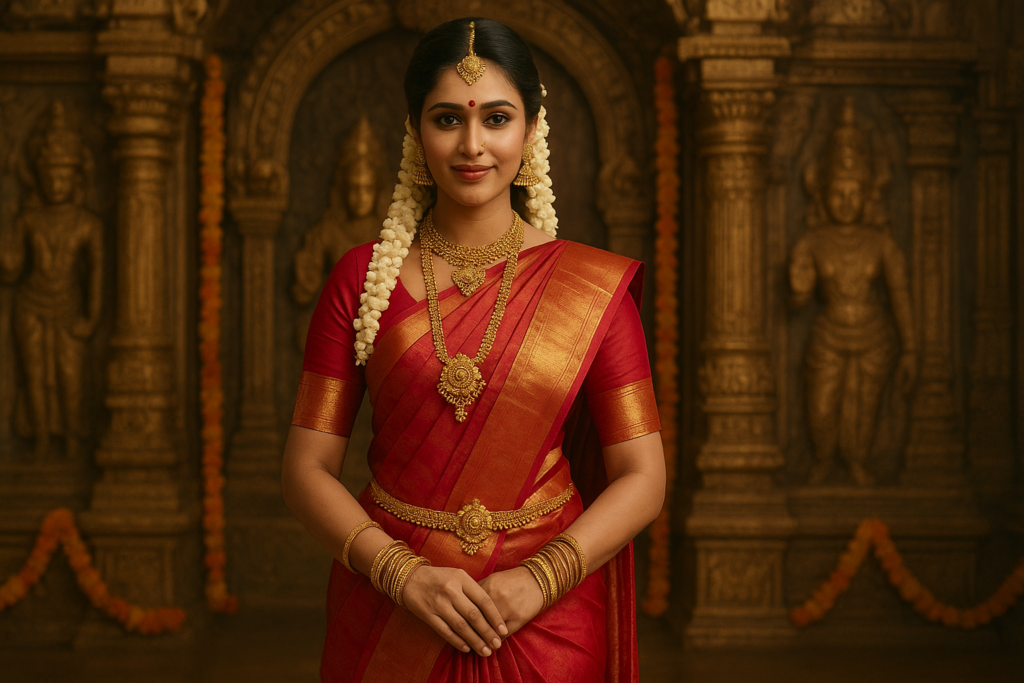
    1. Royal Touch – Banarasi silk ka heavy golden zari har bride ko queen-like feel deta hai.
    2. Trending Shades – Traditional red ke saath saath brides ab pastel pink, emerald green aur royal blue bhi choose kar rahi hain.
    3. Versatility – Yeh reception, pheras, aur even post-wedding dinners ke liye bhi perfect hai.
    4. Sustainable Fashion – Handloom Banarasi ek heirloom piece hoti hai jo generation se generation tak pass ho sakti hai.

    Styling Tips for Bridal Banarasi Saree

    1. Blouse Designs –

    Traditional bride: Full-sleeve silk blouse with zari border.

    Modern bride: Deep-back velvet blouse ya boat-neck style.

    1. Jewelry Pairing –

    Temple jewelry (heavy gold set, kadas, matha patti) traditional brides ke liye best hai.

    Polki/diamond jewelry with pastel Banarasi – gives modern fusion look.

    1. Makeup & Hair –

    Matte finish makeup + bold red lips timeless lagta hai.

    Hair bun with gajra ya mogra flowers Banarasi ke royal vibe ko complete karta hai.


    Latest Banarasi Saree Trends in 2025

    Dual-Tone Banarasi Saree – Do alag colors ek saath, jaise wine-gold ya teal-pink.

    Banarasi Organza Fusion – Lightweight aur breezy, summer weddings ke liye.

    Banarasi with Velvet Blouse – Perfect for winter brides.

    Pastel Banarasi Saree – Minimalist brides ke liye nayi favourite.


    How to Take Care of Banarasi Saree

    Always dry-clean only.

    Store in muslin cloth.

    Har 3–4 months me saree ko fold-change karke rakhein taaki creases na bane.


    Quick Tips for Brides

    Red Banarasi saree is a forever classic.

    Agar comfort chahiye toh lightweight handloom Banarasi choose karein.

    Invest in 1 heavy Banarasi bridal saree + 1 pastel Banarasi for lighter functions.


    FAQs

    Q1: Kya Banarasi saree bridal lehenga ka alternative ho sakti hai?
    👉 Haan, Banarasi saree equally grand aur royal lagti hai aur light bhi hoti hai compared to heavy lehenga.

    Q2: Red ke alawa aur kaun se colors trending hain brides ke liye?
    👉 2025 me pastel pink, mint green, royal blue aur wine shades bahut demand me hain.

    Q3: Kya Banarasi saree heavy hoti hai?
    👉 Pure zari wali thodi heavy hoti hai, lekin ab lightweight Banarasi organza aur soft silk versions bhi available hain.

    Q4: Kaun sa jewelry Banarasi saree ke saath best lagta hai?
    👉 Traditional look ke liye temple jewelry, aur modern brides ke liye polki/diamond sets.

  • Banarasi Saree Buying Guide – Fabric, Weave & Price

    Banarasi sarees are timeless pieces of Indian heritage, loved for their luxurious texture, intricate patterns, and royal charm. But with growing demand and a flood of options online, buying an authentic Banarasi saree can feel overwhelming.

    🧵 1. Know the Origins of Banarasi Sarees

    Banarasi sarees come from Varanasi (Banaras) and are known for:

    • Mughal-inspired floral and foliate motifs
    • Rich gold/silver zari
    • Luxurious handwoven silk
    • Complex weaving techniques passed through generations

    🛍️ Tip: Authentic Banarasi sarees are usually handloom woven, not machine-made.


    ✨ 2. Types of Fabrics in Banarasi Sarees

    Understanding fabric helps you choose the right one:

    • Katan Silk – Pure silk threads; rich, luxurious, and ideal for weddings
    • Organza (Kora) Silk – Lightweight and sheer with delicate zari
    • Georgette Banarasi – Soft drape; best for parties and casual elegance
    • Shattir – Versatile and budget-friendly; great for casual wear
    • Tussar Banarasi – Earthy texture; trendy among eco-conscious buyers

    🌟 Trending in 2025: Lightweight georgette Banarasi sarees with pastel tones and floral weaving.


    🧶 3. Types of Banarasi Weaves

    Banarasi sarees are defined by their weaving styles:

    • Jangla – Floral and leafy jungle patterns in zari
    • Tanchoi – Intricate designs woven without zari, often pallu-heavy
    • Cutwork – Less expensive, partly handwoven with crisp motifs
    • Tissue – Shimmery sarees with golden or silver effect
    • Butidar – Dense gold or silver motifs, traditionally Mughal in style

    📌 Banarasi saree buying tip: Always zoom in on weave detail if shopping online. Real ones have fine, slightly irregular designs due to handwork.


    💰 4. Understand the Price Range

    Price varies based on fabric, zari, and craftsmanship:

    TypeStarting Price (₹)
    Art Silk Banarasi₹800 – ₹1,500
    Semi-Pure Zari₹2,000 – ₹4,000
    Pure Katan Silk with Zari₹5,000 – ₹15,000+
    Handloom Weaves₹10,000 and above

    🔍 5. Signs of an Original Banarasi Saree

    • Silk Mark Certification – A must for pure silk
    • Heavy yet soft texture
    • Intricate but uneven motifs (handwoven)
    • No stiffness or plastic-like shine (a sign of synthetic)
    • Pallu and border will have the same weaving continuity

    👁️ Visual test: Pure Banarasi sarees have visible thread overlaps on the reverse side—called “floating threads”—which don’t exist in power-loom sarees.


    💡 6. Banarasi Saree Trends to Watch in 2025

    • Soft pastels with antique zari
    • Banarasi sarees with digital print + traditional weave
    • Sarees paired with contrast designer blouses
    • Wedding Banarasi lehenga-style draping
    • Organza Banarasi for Gen-Z brides

    🧷 Add these to your wishlist: Banarasi Tissue Sarees & Katan Silk with handwoven gold buta.


    ✅ Final Banarasi Saree Buying Tips

    • Stick to verified sellers or Silk Mark India authorized stores
    • Always request a video or close-up before buying online
    • Cross-check with photos, weight, and fabric description
    • Avoid vague terms like “Banarasi look” or “Banarasi-style saree”

    📣 Ready to Shop a Genuine Banarasi Saree?

    Whether you’re looking for a bridal statement or an everyday classic, follow these Banarasi saree buying tips and explore handpicked weaves with grace, elegance, and heritage.

    👉 Search with “authentic Banarasi saree guide 2025” and shop smart!

  • The Banarasi Saree Manufacturing Process – From Loom to Legacy

    Banarasi sarees, cherished for their luxurious silk and exquisite zari work, represent the finest of Indian handloom artistry. But what truly makes a Banarasi saree so special lies in its intricate manufacturing process—a journey that blends tradition, craftsmanship, and cultural heritage. In this blog, we walk you through each step of how a Banarasi saree is made.


    1. Sourcing and Preparing Raw Silk

    The process begins with sourcing pure silk yarns, primarily from southern India. This silk is thoroughly washed and degummed to ensure it’s free from impurities, giving it a smooth, lustrous finish. Only the finest Katan silk is used for traditional Banarasi sarees.


    2. Designing the Pattern (Naksha Making)

    Once the silk is ready, artisans begin designing the motifs on graph paper using traditional methods. This process is called Naksha making, and the designs usually feature:

    • Mughal-inspired patterns
    • Floral and foliate motifs (kalga, bel)
    • Peacocks, paisleys, and mandalas

    Each design is unique and may take days to finalize.


    3. Punch Card Creation for the Jacquard Loom

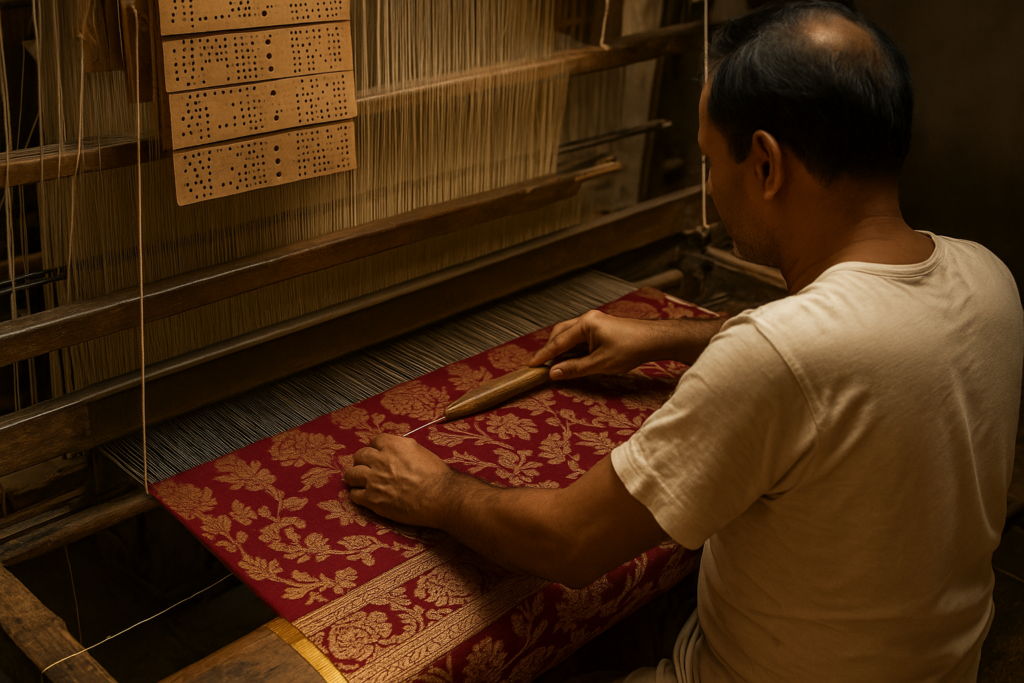
    The finalized design is translated into punch cards—small cardboard pieces with holes punched to guide the loom’s movement. These are fed into a Jacquard loom to control the weaving of patterns row by row.

    Thousands of punch cards are used for a single saree design.


    4. Dyeing the Silk Yarns

    The silk threads are then dyed in vibrant colors as per the design requirement. Traditional methods use natural and azo-free dyes, ensuring eco-friendliness and brilliance of color.


    5. Weaving on the Handloom

    Weaving is where the real magic begins. The weaver, assisted by family members or co-artisans, interlaces the dyed silk threads with zari threads (gold or silver-coated) on the loom. This meticulous weaving process can take 15 to 45 days or more, depending on the intricacy of the design.

    Types of weaving include:

    • Jangla – Dense floral motifs
    • Tanchoi – Intricate patterns with no zari
    • Cutwork – Simplified floral patterns
    • Butidar – Small, repetitive motifs across the body

    6. Finishing Touches and Quality Checks

    After weaving, the saree undergoes:

    • Polishing with a roller to enhance shine
    • Cutting and finishing of loose threads
    • Final quality inspection for defects

    Once approved, the saree is ready to be packed and shipped.


    7. Artisan Legacy and Sustainability

    Each Banarasi saree is a product of generations of skill. Many weavers work within family-owned units, often combining heritage techniques with modern innovations. Supporting Banarasi sarees also means supporting sustainable and ethical fashion.


    Conclusion

    From the hum of the loom to the shimmer of zari, the manufacturing process of Banarasi sarees is a beautiful narrative of craftsmanship and culture. Each thread tells a story, making every saree a wearable piece of art and tradition.

    Whether you’re a fashion lover, a bride-to-be, or an admirer of Indian textiles, knowing the process behind a Banarasi saree deepens your appreciation for this timeless attire.