Category: Fashion

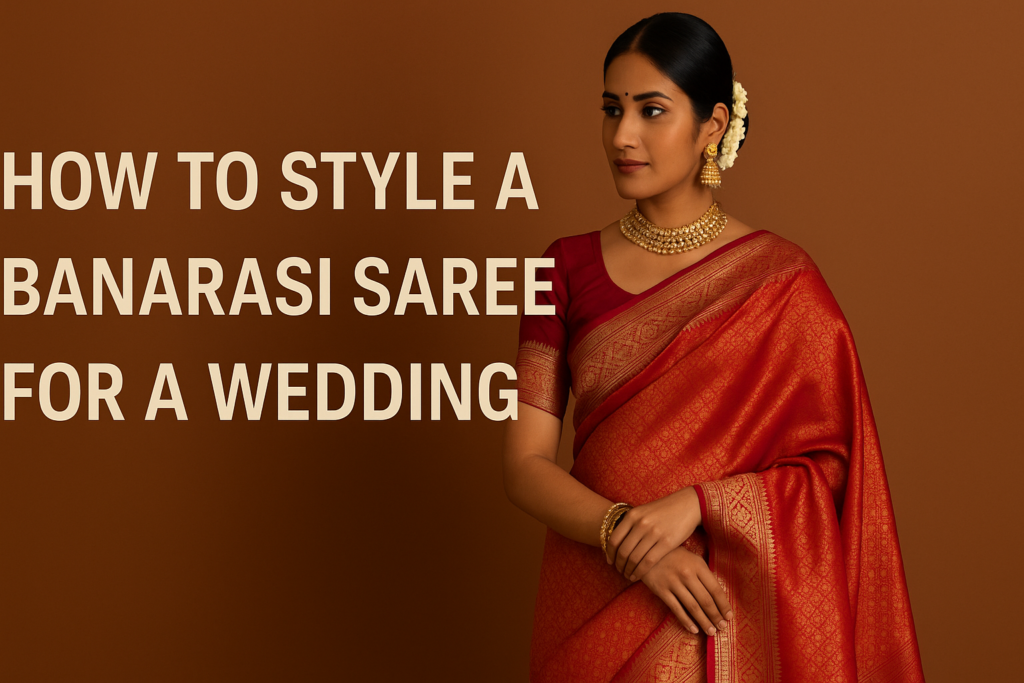
  • How to Style a Banarasi Saree for a Wedding

    🟣 Introduction

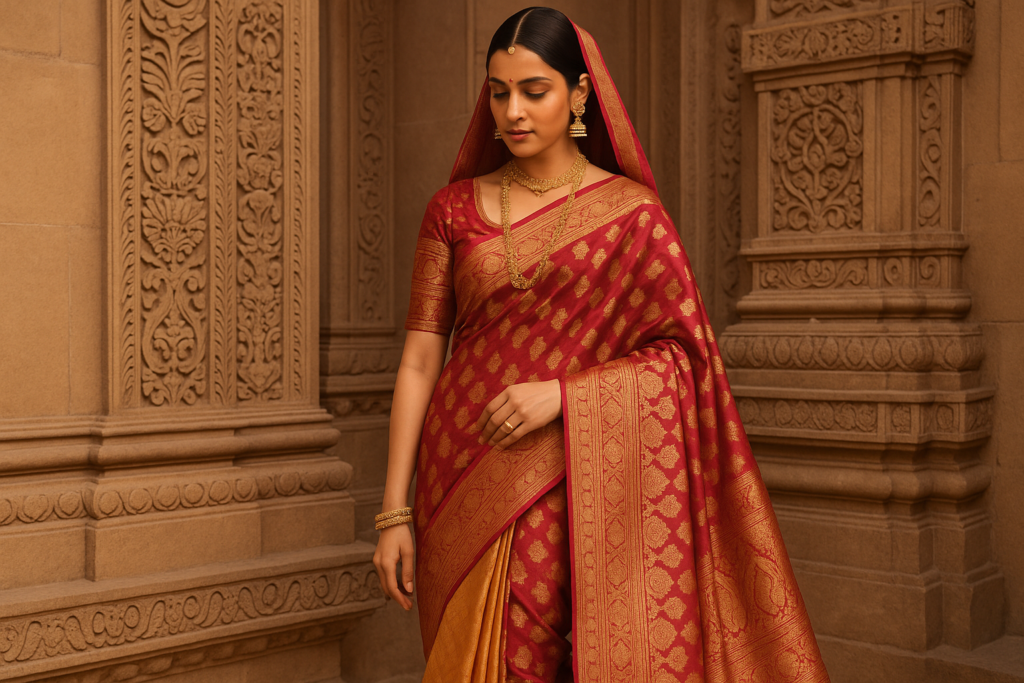
    A Banarasi saree is more than just a piece of clothing—it’s a symbol of tradition, elegance, and timeless beauty. Especially for weddings, the banarasi saree look is considered one of the most regal and graceful ensembles. In this blog, we will explore how to style a Banarasi saree for a wedding with the perfect blouse, accessories, and draping style to elevate your bridal or guest look.

    🟢 Bold Headings & Subheadings

    𝗖𝗵𝗼𝗼𝘀𝗲 𝘁𝗵𝗲 𝗥𝗶𝗴𝗵𝘁 𝗕𝗮𝗻𝗮𝗿𝗮𝘀𝗶 𝗦𝗮𝗿𝗲𝗲 𝗙𝗼𝗿 𝗬𝗼𝘂𝗿 𝗟𝗼𝗼𝗸

    Selecting the right Banarasi saree is the first step. Go for rich hues like maroon, royal blue, emerald green, or gold. Look for zari work, intricate floral motifs, or traditional brocade that complements the wedding vibe.

    Trending Tip: Bridal banarasi sarees with contrast borders or dual-tone weaving are in vogue this season.

    𝗣𝗲𝗿𝗳𝗲𝗰𝘁 𝗕𝗹𝗼𝘂𝘀𝗲 𝗣𝗮𝗶𝗿𝗶𝗻𝗴𝘀

    Your blouse can make or break your entire wedding saree styling. You can opt for:

    • Elbow-sleeve brocade blouse with zari detailing
    • Velvet blouse with deep back design
    • Boat-neck silk blouse with embroidery

    Tip: Add latkans (tassels) at the back for an extra touch of charm.

    𝗗𝗿𝗮𝗽𝗶𝗻𝗴 𝗦𝘁𝘆𝗹𝗲𝘀 𝘁𝗼 𝗘𝗻𝗵𝗮𝗻𝗰𝗲 𝗧𝗵𝗲 𝗟𝗼𝗼𝗸

    There are various banarasi saree draping styles depending on the occasion:

    • Traditional Nivi Style – Classic and neat for brides or elder guests
    • Bengali Draping – Elegant and royal with a wide pallu
    • Seedha Pallu – Popular for showcasing heavy zari work on the pallu

    Experiment with pleats, waist belts, or wearing the pallu over both shoulders for a modern twist.

    𝗔𝗰𝗰𝗲𝘀𝘀𝗼𝗿𝗶𝗲𝘀 𝘁𝗼 𝗠𝗮𝘁𝗰𝗵 𝗪𝗶𝘁𝗵 𝗕𝗮𝗻𝗮𝗿𝗮𝘀𝗶 𝗦𝗮𝗿𝗲𝗲

    • Statement gold or kundan necklace set
    • Traditional jhumkas or chandbalis
    • Gold or floral bun accessories
    • Embellished potli bag or clutch
    • Matching bangles with a kada for traditional touch

    Trending Tip: Layered necklaces with a maang tikka complete the bridal banarasi saree look beautifully.

    𝗙𝗼𝗼𝘁𝘄𝗲𝗮𝗿 𝗮𝗻𝗱 𝗠𝗮𝗸𝗲𝘂𝗽 𝗧𝗶𝗽𝘀

    Footwear: Go for embellished juttis, mojris, or ethnic wedges.

    Makeup: Pair your bold banarasi look with a classic bridal makeup — dewy base, kohl eyes, and deep red lips.

    𝗙𝗶𝗻𝗮𝗹 𝗪𝗼𝗿𝗱𝘀

    Whether you’re the bride, bridesmaid, or wedding guest, styling your Banarasi saree with the right elements can transform your look into something truly unforgettable. With the right drape, accessories, and confidence—you’ll definitely stand out at any wedding function.
  • Chanderi vs. Maheshwari Saree – What’s the Difference?

    🟢 Introduction

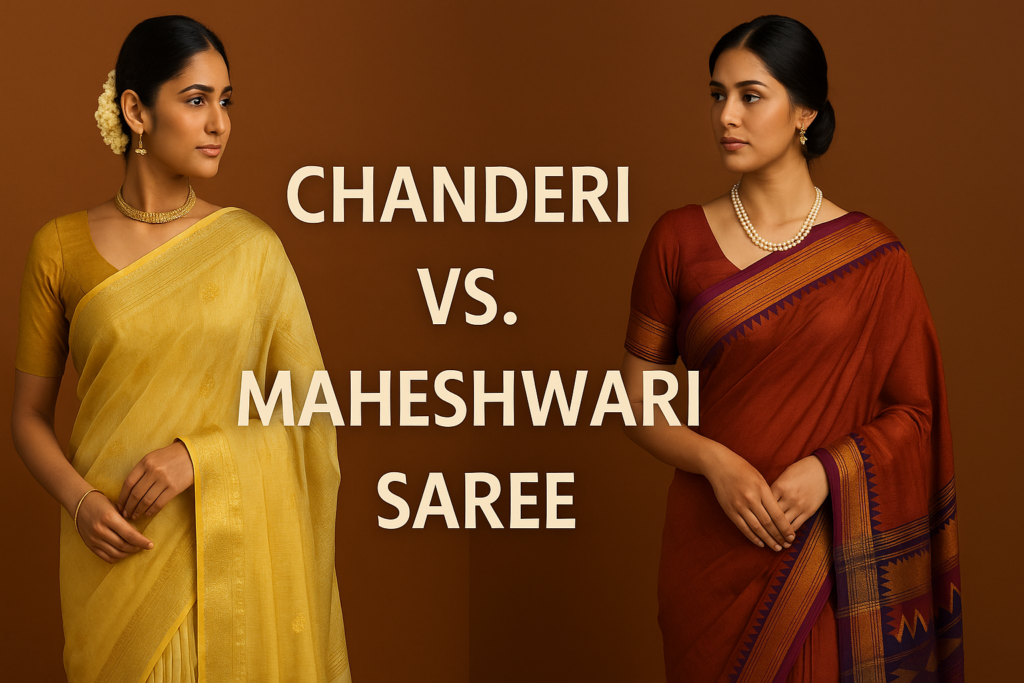
    In the world of traditional Indian handloom sarees, Chanderi and Maheshwari stand out as elegant symbols of craftsmanship and heritage. Both originating from Madhya Pradesh, they appear similar at first glance but are quite distinct in weave, fabric, and appearance. If you’re wondering which one to choose—this guide comparing Chanderi vs. Maheshwari saree will help you decide.

    🟣 Bold Headings & Subheadings:

    𝗪𝗵𝗮𝘁 𝗶𝘀 𝗮 𝗖𝗵𝗮𝗻𝗱𝗲𝗿𝗶 𝗦𝗮𝗿𝗲𝗲?

    Chanderi sarees come from the town of Chanderi in Madhya Pradesh and are known for their sheer texture, glossy finish, and lightweight feel. These sarees are made with silk, cotton, or silk-cotton blends and are ideal for summer weddings and festivities.

    • 𝘍𝘦𝘢𝘵𝘶𝘳𝘦𝘴:
      • Extremely lightweight and breathable
      • Glossy, transparent appearance
      • Subtle zari borders and motifs
      • Best for festive and formal wear

    𝗪𝗵𝗮𝘁 𝗶𝘀 𝗮 𝗠𝗮𝗵𝗲𝘀𝗵𝘄𝗮𝗿𝗶 𝗦𝗮𝗿𝗲𝗲?

    Maheshwari sarees are crafted in Maheshwar, a historic town by the Narmada River. Known for their elegant borders, reversible pallu, and geometric patterns, these sarees are made using cotton-silk blends, making them perfect for both daily and festive wear.

    • 𝘍𝘦𝘢𝘵𝘶𝘳𝘦𝘴:
      • Reversible border and pallu (can be worn both ways)
      • Geometric and temple-inspired motifs
      • Slightly heavier than Chanderi
      • Great for office, casual, and semi-formal events

    𝗠𝗮𝗷𝗼𝗿 𝗗𝗶𝗳𝗳𝗲𝗿𝗲𝗻𝗰𝗲𝘀 𝗯𝗲𝘁𝘄𝗲𝗲𝗻 𝗖𝗵𝗮𝗻𝗱𝗲𝗿𝗶 𝗮𝗻𝗱 𝗠𝗮𝗵𝗲𝘀𝗵𝘄𝗮𝗿𝗶 𝗦𝗮𝗿𝗲𝗲

    FeatureChanderi SareeMaheshwari Saree
    OriginChanderi, Madhya PradeshMaheshwar, Madhya Pradesh
    TextureSheer, lightweightSoft with more structure
    FabricSilk, Cotton, Silk-CottonCotton-Silk Blend
    BordersSubtle, shiny zariGeometric, reversible borders
    Ideal ForWeddings, FestivalsDaily wear, Office, Festive

    𝗪𝗵𝗶𝗰𝗵 𝗦𝗮𝗿𝗲𝗲 𝗦𝗵𝗼𝘂𝗹𝗱 𝗬𝗼𝘂 𝗕𝘂𝘆?

    Choose a Chanderi saree if you prefer delicate elegance and a translucent look. Maheshwari sarees are perfect for those who want structured elegance and rich, geometric borders with comfort.

    🟠 Final Thoughts

    Both Chanderi and Maheshwari sarees are treasures of Indian textile heritage. Understanding their unique features helps you choose the perfect saree for the right occasion—whether you’re attending a wedding or looking for elegant office wear.

    Would you like me to create a 16:9 blog image for this post?

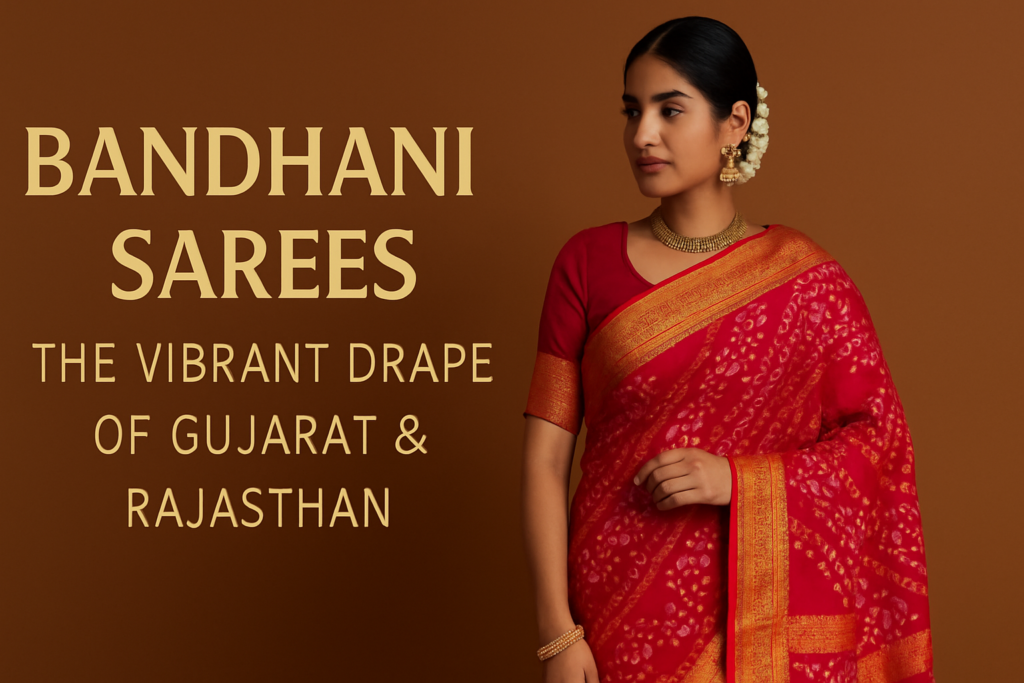
  • Bandhani Sarees – The Vibrant Drape of Gujarat & Rajasthan

    𝗧𝗵𝗲 𝗘𝗻𝗰𝗵𝗮𝗻𝘁𝗶𝗻𝗴 𝗪𝗼𝗿𝗹𝗱 𝗼𝗳 𝗕𝗮𝗻𝗱𝗵𝗮𝗻𝗶 𝗦𝗮𝗿𝗲𝗲𝘀
    Originating from the colorful states of Gujarat and Rajasthan, Bandhani sarees are a mesmerizing display of India’s tie-dye tradition. Known for their dotted patterns, vivid color combinations, and airy fabrics, these sarees hold a deep cultural and artistic significance.

    ✧✧✧

    𝗪𝗵𝗮𝘁 𝗶𝘀 𝗮 𝗕𝗮𝗻𝗱𝗵𝗮𝗻𝗶 𝗦𝗮𝗿𝗲𝗲?
    Bandhani (or Bandhej) is derived from the Sanskrit word ‘Bandh’, meaning ‘to tie’. This art involves tying small sections of fabric with threads and then dyeing it to create intricate patterns. The result is a saree filled with thousands of colorful dots and shapes, forming stunning geometries and motifs.

    ✧✧✧

    𝗞𝗲𝘆 𝗙𝗲𝗮𝘁𝘂𝗿𝗲𝘀 𝗼𝗳 𝗕𝗮𝗻𝗱𝗵𝗮𝗻𝗶 𝗦𝗮𝗿𝗲𝗲𝘀

    🔹 𝗘𝘅𝗾𝘂𝗶𝘀𝗶𝘁𝗲 𝗧𝗶𝗲-𝗗𝘆𝗲 𝗣𝗮𝘁𝘁𝗲𝗿𝗻𝘀
    Every Bandhani saree is handmade, ensuring that no two pieces are ever identical. The dots form traditional patterns such as waves, flowers, or jaals (grids).

    🔹 𝗧𝗿𝗮𝗱𝗶𝘁𝗶𝗼𝗻𝗮𝗹 𝗠𝗼𝘁𝗶𝗳𝘀
    Common Bandhej motifs include Leheriya (waves), Ekdali (single dot), Boond (small dots), and Shikari (hunting scenes) — each with cultural significance.

    🔹 𝗩𝗶𝗯𝗿𝗮𝗻𝘁 𝗖𝗼𝗹𝗼𝗿 𝗣𝗮𝗹𝗲𝘁𝘁𝗲
    Colors like red, yellow, green, pink, and maroon dominate the palette, each carrying symbolic meaning in regional traditions.

    🔹 𝗟𝗶𝗴𝗵𝘁𝘄𝗲𝗶𝗴𝗵𝘁 & 𝗘𝗹𝗲𝗴𝗮𝗻𝘁
    Usually made in georgette, chiffon, or cotton, Bandhani sarees are perfect for hot climates and festive wear.

    ✧✧✧

    𝗕𝗮𝗻𝗱𝗵𝗮𝗻𝗶 𝗶𝗻 𝗚𝘂𝗷𝗮𝗿𝗮𝘁 𝗩𝘀. 𝗥𝗮𝗷𝗮𝘀𝘁𝗵𝗮𝗻
    While both states practice Bandhani, Rajasthani Bandhej often features finer dots and deeper reds and maroons, whereas Gujarati Bandhani includes brighter hues and larger patterns.

    ✧✧✧

    𝗪𝗵𝘆 𝗘𝘃𝗲𝗿𝘆 𝗪𝗼𝗺𝗮𝗻 𝗦𝗵𝗼𝘂𝗹𝗱 𝗢𝘄𝗻 𝗮 𝗕𝗮𝗻𝗱𝗵𝗮𝗻𝗶 𝗦𝗮𝗿𝗲𝗲
    Owning a Bandhani saree is like wearing a piece of folk art. Whether it’s a traditional wedding, Navratri night, or a cultural event, these sarees make a statement. With so many trending bandhej saree designs available online, you can pick styles that match both tradition and modernity.

  • What Makes Paithani Sarees Special? A Glimpse into Maharashtra’s Royal Weave

    Paithani sarees are not just garments — they’re a legacy of Maharashtra’s rich culture. Known for their vibrant hues, intricate zari work, and handwoven silk, these sarees are a must-have for every saree connoisseur. In this blog, we explore the key paithani saree features that make these Maharashtrian silk sarees truly special.


    🧵 The Royal Origin of Paithani

    The roots of the Paithani saree trace back over 2,000 years to Paithan, a small town near Aurangabad. Once patronized by the Peshwas and Nizams, Paithanis were woven exclusively for royalty. Today, they continue to hold cultural and ceremonial importance, especially in Maharashtrian weddings.


    🌟 Key Features of Paithani Sarees

    Here are the standout features that define a traditional Paithani saree:

    🔸 Pure Silk Weaving
    Each Paithani saree is made from premium mulberry silk that gives it a soft texture and radiant finish.

    🔸 Rich Zari Border & Pallu
    Heavy gold and silver zari designs featuring motifs like peacocks, lotus, and vines dominate the border and pallu.

    🔸 Handloom Craftsmanship
    Woven entirely by hand, each saree takes weeks to months to complete — ensuring uniqueness and quality.

    🔸 Reversible Border Technique
    One of the most iconic paithani saree features is its reversible border — an innovation of traditional craftsmanship.

    🔸 Lightweight Yet Regal
    Despite their royal look, Paithani sarees are surprisingly lightweight and easy to drape, making them ideal for long festive occasions.


    🎨 Popular Colors & Motifs in Paithani Sarees

    - Colors: Peacock Green, Magenta, Royal Blue, Mustard Yellow
    - Motifs: Mor (Peacock), Bangdi Mor, Lotus, Asawali (floral vine), Narali (coconut)


    🌺 Why Every Woman Should Own a Paithani Saree

    From bridal outfits to festive attire, the Paithani fits every traditional occasion. It is not just a saree; it’s an heirloom that holds emotional and cultural value. Owning a traditional Paithani saree is like carrying forward a piece of Maharashtrian legacy


    Conclusion

    A Paithani saree is a timeless blend of tradition, luxury, and artistry. If you’re passionate about ethnic wear, a Paithani should undoubtedly be part of your collection. After all, every thread in this saree tells a story of heritage and royalty.

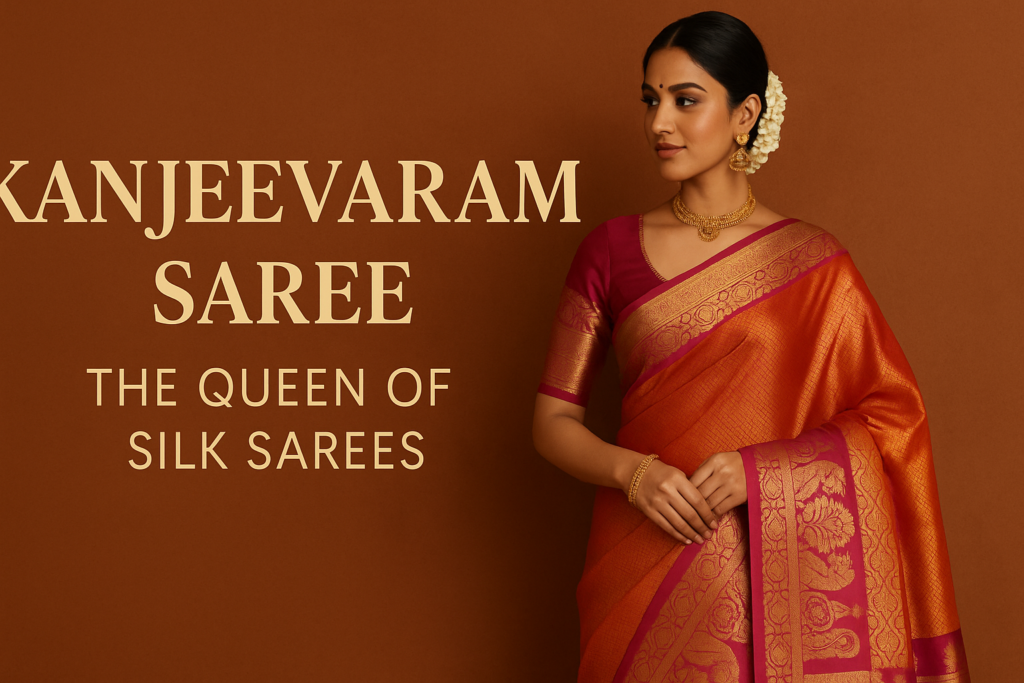
  • Kanjeevaram Saree: The Queen of Silk Sarees

    When it comes to traditional South Indian sarees, nothing rivals the elegance, grace, and grandeur of the Kanjeevaram silk saree. Hailed as the “Queen of Silk,” this timeless masterpiece blends vibrant colors, luxurious silk, and age-old craftsmanship to create a garment that’s not just worn but celebrated.


    ✨ Origin of the Kanjeevaram Silk Saree

    Kanjeevaram sarees originate from the temple town of Kanchipuram in Tamil Nadu, a place steeped in spirituality and cultural heritage. Woven by highly skilled weavers, many of whom belong to families practicing the craft for generations, these sarees are an embodiment of South Indian tradition and craftsmanship.


    🧵 What Makes Kanjeevaram Silk Sarees Unique?

    ✅ 1. Pure Mulberry Silk

    Kanjeevaram sarees are made from pure mulberry silk sourced from South India. The silk threads are thicker and more lustrous, making the saree rich in texture and long-lasting.

    ✅ 2. Zari Work with Gold and Silver

    The borders and pallu of Kanjeevaram sarees are adorned with real gold or silver zari, creating intricate designs inspired by temples, peacocks, elephants, and mythological tales.

    ✅ 3. Contrasting Borders

    The hallmark of a Kanjeevaram silk saree is its bold contrast borders, woven separately and then interlocked with the body using a technique called korvai.


    🌸 Popular Designs & Motifs

    Kanjeevaram sarees come in a wide variety of motifs and patterns such as:

    • Annapakshi (mythical birds)
    • Rudraksha beads
    • Mango (paisley) motifs
    • Temple borders
    • Checks and stripes

    Each motif carries a spiritual or cultural meaning, adding depth to the saree’s aesthetic value.


    👰‍♀️ Kanjeevaram – The Bridal Favorite

    In many South Indian weddings, the bride is adorned in a vibrant Kanjeevaram saree that represents wealth, auspiciousness, and tradition. The saree becomes a cherished heirloom, passed down through generations.


    🛍️ Where to Buy Authentic Kanjeevaram Sarees

    Whether you’re shopping in Chennai’s T. Nagar, visiting Kanchipuram handloom centers, or browsing online stores, always look for:

    • Silk Mark certification
    • Trusted weavers and heritage brands
    • Handwoven tags and quality zari threads

    🌿 Sustainability & Revival of Weaving Arts

    By choosing handwoven Kanjeevaram silk sarees, you not only invest in timeless fashion but also support Indian artisans, sustainable fashion, and the revival of handloom heritage.


    🧡 Conclusion

    A Kanjeevaram silk saree is more than just attire—it’s a piece of Indian history woven with devotion, art, and identity. Whether you’re a bride, a cultural connoisseur, or a saree enthusiast, a Kanjeevaram belongs in your wardrobe as a symbol of elegance and tradition.

    Own one. Wear one. Pass it on.

  • The History of Banarasi Sarees – Heritage in Every Thread

    𝐈𝐧𝐭𝐫𝐨𝐝𝐮𝐜𝐭𝐢𝐨𝐧 – A Saree That Speaks of Royalty
    India’s cultural fabric is woven with threads of heritage — and at the heart of it lies the legendary Banarasi saree. Revered for its rich silk, intricate zari work, and timeless appeal, the Banarasi saree isn’t just a garment; it’s a piece of art with centuries of history. In this post, we’ll explore the origin of Banarasi sarees, their evolution, and their iconic status in Indian fashion.

    𝐓𝐡𝐞 𝐎𝐫𝐢𝐠𝐢𝐧 𝐨𝐟 𝐁𝐚𝐧𝐚𝐫𝐚𝐬𝐢 𝐒𝐚𝐫𝐞𝐞𝐬
    The origin of the Banarasi saree can be traced back to the Mughal era (14th–15th century), when Persian motifs and weaving techniques were introduced to Indian artisans in Varanasi (also known as Banaras). The Mughal emperors, known for their patronage of fine arts, inspired the floral and foliate designs that are now synonymous with traditional Banarasi silk sarees.

    These luxurious sarees were originally woven with pure gold and silver threads for the royalty and the elite, making them a status symbol for brides and aristocrats alike.

    𝐓𝐫𝐚𝐝𝐢𝐭𝐢𝐨𝐧𝐚𝐥 𝐖𝐞𝐚𝐯𝐢𝐧𝐠 – 𝐓𝐡𝐞 𝐀𝐫𝐭 𝐁𝐞𝐡𝐢𝐧𝐝 𝐄𝐯𝐞𝐫𝐲 𝐓𝐡𝐫𝐞𝐚𝐝
    Crafted by highly skilled artisans of Varanasi, each Banarasi saree is a masterpiece. It takes anywhere between 15 days to 6 months to complete one saree, depending on the design complexity. These sarees are woven on traditional handlooms, using techniques passed down through generations.

    The four main varieties include:

    • Katan (pure silk)
    • Organza (kora, with zari and silk)
    • Georgette
    • Shattir

    Artisans use real zari made from silver threads, and the motifs often depict Mughal-inspired designs such as bel, kalga, paisley, and floral patterns.

    𝐂𝐮𝐥𝐭𝐮𝐫𝐚𝐥 𝐒𝐢𝐠𝐧𝐢𝐟𝐢𝐜𝐚𝐧𝐜𝐞 𝐨𝐟 𝐁𝐚𝐧𝐚𝐫𝐚𝐬𝐢 𝐒𝐚𝐫𝐞𝐞𝐬
    Banarasi sarees are an integral part of Indian bridal trousseaus. Especially in North India, wearing a red or maroon Banarasi saree is a ritual for Hindu weddings. It symbolizes prosperity, fertility, and timeless tradition.

    Even today, the Banarasi saree remains a popular choice among Bollywood celebrities, politicians, and fashion influencers for festivals, weddings, and cultural events.

    𝐄𝐜𝐨𝐧𝐨𝐦𝐢𝐜 𝐚𝐧𝐝 𝐆𝐈 𝐓𝐚𝐠 𝐈𝐦𝐩𝐨𝐫𝐭𝐚𝐧𝐜𝐞
    Recognizing its uniqueness, the Government of India granted the Geographical Indication (GI) tag to Banarasi sarees in 2009. This protects the identity of Banarasi weaving and prevents imitation products from being sold under the same name.

    The handloom industry in Varanasi supports over 1 lakh (100,000) weavers, playing a crucial role in India’s textile economy.

    𝐓𝐫𝐞𝐧𝐝𝐢𝐧𝐠 𝐓𝐨𝐝𝐚𝐲 – 𝐌𝐨𝐝𝐞𝐫𝐧 𝐓𝐚𝐤𝐞 𝐨𝐧 𝐓𝐫𝐚𝐝𝐢𝐭𝐢𝐨𝐧
    Designers today are giving a contemporary twist to traditional Banarasi sarees by blending lighter fabrics, pastel shades, and minimalist motifs — making them appealing to younger brides and fashion-forward women.

    Celebrities like Deepika Padukone, Vidya Balan, and Alia Bhatt have revived the charm of Banarasi weaves by donning them at red carpets and wedding events.

    𝐂𝐨𝐧𝐜𝐥𝐮𝐬𝐢𝐨𝐧 – 𝐀 𝐓𝐡𝐫𝐞𝐚𝐝 𝐨𝐟 𝐓𝐢𝐦𝐞𝐥𝐞𝐬𝐬 𝐁𝐞𝐚𝐮𝐭𝐲
    From its royal past to its modern-day glam, the Banarasi saree has stood the test of time. Whether it’s for your wedding, a festival, or a timeless addition to your ethnic wardrobe — owning a Banarasi saree is owning a piece of Indian heritage.

    🛍️ Explore our exclusive Banarasi Saree Collection on Zuanas.com – where every thread tells a story.

  • 🌸 The Glorious History of Saree – India’s Timeless Elegance

    The saree is not just a garment—it’s a cultural symbol woven into the identity of Indian tradition. For centuries, it has graced the wardrobes of women across regions, castes, and classes, adapting in style and drape while staying true to its roots.


    1. 🕰️ The Origin of Saree – Tracing Back to the Indus Valley Civilization

    The history of saree dates back over 5,000 years to the Indus Valley Civilization. Archaeological findings show figurines of women draped in a cloth similar to the modern-day saree. The term ‘saree’ comes from the Sanskrit word “śātika”, which refers to a strip of cloth.

    • Women traditionally wore sarees without a blouse or petticoat.
    • The earliest sarees were made of cotton and later of silk during the Mauryan and Gupta periods.

    👉 Trending Keywords: ancient Indian saree, Indus Valley clothing, origin of saree


    2. 👑 Saree in Ancient and Medieval India – Royalty & Rituals

    In ancient scriptures like the Rigveda and Mahabharata, the saree is mentioned as attire worn by queens and goddesses. During the Mauryan, Gupta, and Mughal periods, sarees evolved with richer fabrics, embroidery, and symbolism.

    • Sarees featured gold threads, floral motifs, and natural dyes.
    • The Mughal era introduced Persian-style artistry and zari weaving.

    👉 Keywords: saree in Mughal era, historical Indian clothing, Vedic saree styles


    3. 🌍 Regional Saree Traditions – Diversity in Every Drape

    India’s saree culture is incredibly diverse. Each region boasts a unique type of saree, from weaving technique to draping style.

    • Banarasi Saree (Uttar Pradesh): Fine silk and intricate zari borders
    • Kanjeevaram Saree (Tamil Nadu): Bold colors, heavy pallu, temple motifs
    • Paithani Saree (Maharashtra): Golden threads and peacock designs
    • Also explore: Bandhani (Gujarat), Chanderi (MP), Sambalpuri (Odisha)

    👉 Keywords: Banarasi saree history, Kanjeevaram saree origin, types of sarees in India


    4. 🇬🇧 Saree During British Rule – The Evolution of Blouse & Petticoat

    The British Raj brought new clothing norms. Sarees were adapted to include blouses and petticoats for modesty in urban colonial India.

    • Jnanadanandini Devi popularized this combo to be accepted in elite circles.
    • This style became the standard saree attire in modern India.

    👉 Keywords: colonial saree fashion, blouse and petticoat history, British influence on Indian attire


    5. 🎨 Saree in Modern India – Reinvention & Global Recognition

    From red carpets to fashion weeks, the saree is now a global trend. Designers have redefined the saree to suit contemporary tastes.

    • Belted sarees, jacket sarees, sarees with sneakers, and crop tops
    • Sustainable and handloom sarees are regaining popularity

    👉 Keywords: modern saree trends, designer sarees India, sustainable Indian fashion


    6. 💫 The Saree as a Cultural Symbol – Tradition Meets Empowerment

    The saree isn’t just clothing—it’s a statement of strength, identity, and pride. Whether it’s worn at weddings or protests, it symbolizes grace and cultural depth.

    👉 Keywords: saree as tradition, saree empowerment, Indian heritage clothing


    🧵 Conclusion – A Legacy Draped in Elegance

    From its ancient roots to its modern reinvention, the saree continues to symbolize India’s textile genius, elegance, and cultural power. When you wear a saree, you’re not just dressing up—you’re wearing history.

  • Saree in Banaras – A Timeless Tradition of Weaving Royalty

    Banaras, also known as Varanasi, is not only a spiritual hub but also the beating heart of India’s luxurious handloom industry. When you think of Banaras, you inevitably think of the iconic Banarasi saree—a symbol of heritage, elegance, and craftsmanship. Let’s explore why sarees from Banaras continue to capture hearts across generations and how they remain an eternal favorite in Indian wardrobes.


    Why Banaras is Synonymous with Sarees

    The art of saree weaving in Banaras dates back over 500 years, flourishing under Mughal patronage. The city became a melting pot of Persian design influence and Indian artistry, giving birth to the famous Banarasi silk saree. Today, Banaras is home to thousands of skilled artisans who continue this age-old legacy.


    What Makes Banarasi Sarees So Unique?

    1. Pure Silk & Zari Work
      Sarees in Banaras are made from Katan silk, enhanced with gold and silver zari threads, giving them a regal look and feel.
    2. Handloom Craftsmanship
      Each saree is handwoven using traditional looms, often taking weeks or months to complete depending on the design complexity.
    3. Rich Cultural Motifs
      Banarasi sarees feature intricate motifs like floral jaal, paisleys, Mughal-inspired patterns, and temple borders, each carrying symbolic meaning.

    Types of Sarees Found in Banaras

    • Katan Silk Sarees – Woven from pure silk, ideal for weddings and festivals.
    • Georgette Banarasi Sarees – Lightweight and trendy, perfect for parties.
    • Organza/Kora Sarees – Sheer texture with bold zari work, a blend of elegance and grace.
    • Shattir Sarees – Affordable yet stylish options with a modern twist.

    Where to Buy Authentic Sarees in Banaras

    Visiting Banaras offers a unique chance to witness sarees being woven in real time. Key markets to explore include:

    • Godowlia Market
    • Chowk Area
    • Peelikothi
    • Lahurabir

    You can also find government-authorized handloom emporiums and designer boutiques offering certified authentic Banarasi sarees.


    Saree as a Symbol of Banarasi Culture

    Wearing a Banarasi saree is more than a style statement—it’s a cultural homage. Brides, classical dancers, and dignitaries often choose Banarasi sarees for the elegance and status they bring.


    Conclusion

    Sarees in Banaras are not just garments—they’re woven legacies, reflecting centuries of tradition, artistry, and cultural pride. Whether you’re visiting the city or shopping online, owning a Banarasi saree is owning a piece of India’s living heritage.

  • The Banarasi Saree Manufacturing Process – From Loom to Legacy

    Banarasi sarees, cherished for their luxurious silk and exquisite zari work, represent the finest of Indian handloom artistry. But what truly makes a Banarasi saree so special lies in its intricate manufacturing process—a journey that blends tradition, craftsmanship, and cultural heritage. In this blog, we walk you through each step of how a Banarasi saree is made.


    1. Sourcing and Preparing Raw Silk

    The process begins with sourcing pure silk yarns, primarily from southern India. This silk is thoroughly washed and degummed to ensure it’s free from impurities, giving it a smooth, lustrous finish. Only the finest Katan silk is used for traditional Banarasi sarees.


    2. Designing the Pattern (Naksha Making)

    Once the silk is ready, artisans begin designing the motifs on graph paper using traditional methods. This process is called Naksha making, and the designs usually feature:

    • Mughal-inspired patterns
    • Floral and foliate motifs (kalga, bel)
    • Peacocks, paisleys, and mandalas

    Each design is unique and may take days to finalize.


    3. Punch Card Creation for the Jacquard Loom

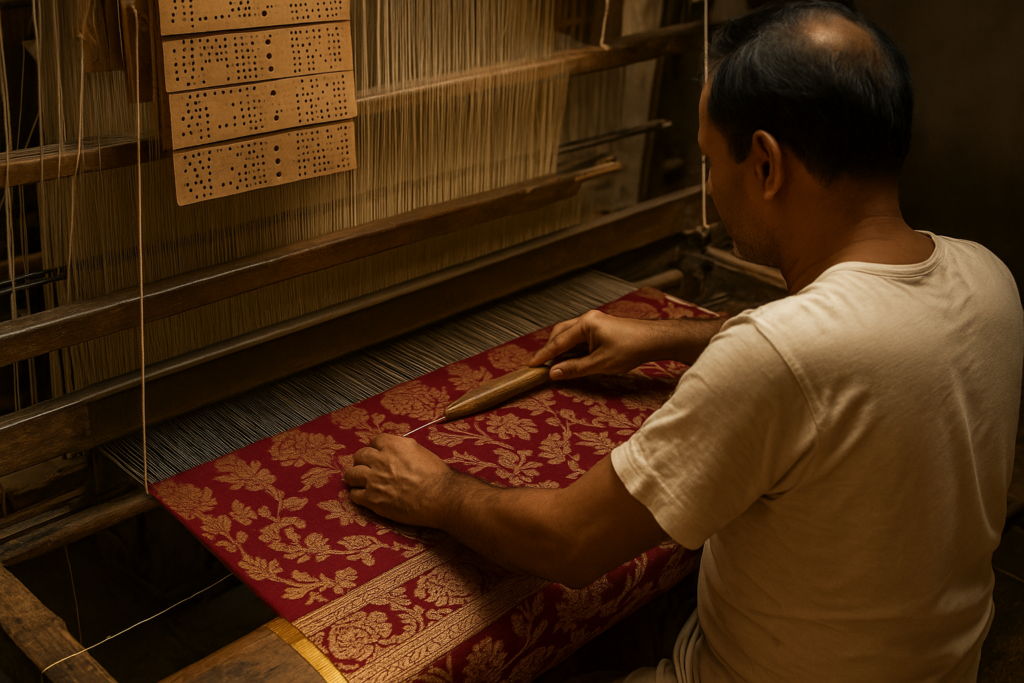
    The finalized design is translated into punch cards—small cardboard pieces with holes punched to guide the loom’s movement. These are fed into a Jacquard loom to control the weaving of patterns row by row.

    Thousands of punch cards are used for a single saree design.


    4. Dyeing the Silk Yarns

    The silk threads are then dyed in vibrant colors as per the design requirement. Traditional methods use natural and azo-free dyes, ensuring eco-friendliness and brilliance of color.


    5. Weaving on the Handloom

    Weaving is where the real magic begins. The weaver, assisted by family members or co-artisans, interlaces the dyed silk threads with zari threads (gold or silver-coated) on the loom. This meticulous weaving process can take 15 to 45 days or more, depending on the intricacy of the design.

    Types of weaving include:

    • Jangla – Dense floral motifs
    • Tanchoi – Intricate patterns with no zari
    • Cutwork – Simplified floral patterns
    • Butidar – Small, repetitive motifs across the body

    6. Finishing Touches and Quality Checks

    After weaving, the saree undergoes:

    • Polishing with a roller to enhance shine
    • Cutting and finishing of loose threads
    • Final quality inspection for defects

    Once approved, the saree is ready to be packed and shipped.


    7. Artisan Legacy and Sustainability

    Each Banarasi saree is a product of generations of skill. Many weavers work within family-owned units, often combining heritage techniques with modern innovations. Supporting Banarasi sarees also means supporting sustainable and ethical fashion.


    Conclusion

    From the hum of the loom to the shimmer of zari, the manufacturing process of Banarasi sarees is a beautiful narrative of craftsmanship and culture. Each thread tells a story, making every saree a wearable piece of art and tradition.

    Whether you’re a fashion lover, a bride-to-be, or an admirer of Indian textiles, knowing the process behind a Banarasi saree deepens your appreciation for this timeless attire.

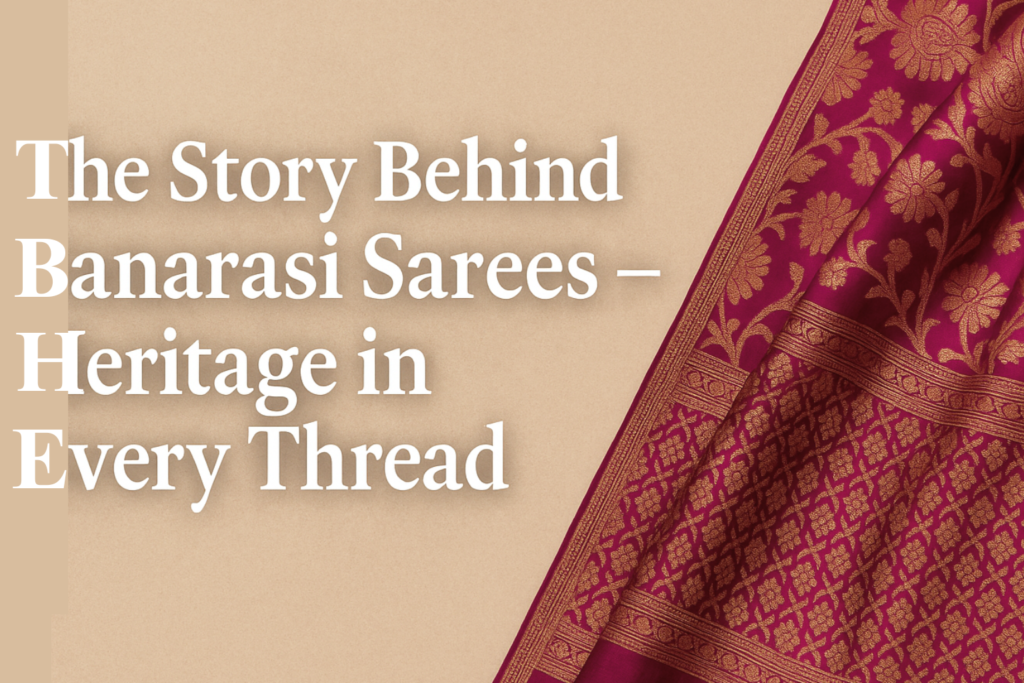
  • The Story Behind Banarasi Sarees – Heritage in Every Thread

    When it comes to timeless elegance and rich tradition, Banarasi sarees remain a crown jewel in Indian ethnic fashion. Originating from the ancient city of Varanasi (Banaras), these sarees are more than just clothing—they are handwoven works of art, passed down through generations. In this blog, we’ll explore the fascinating history, cultural significance, and modern-day relevance of Banarasi sarees.

    Origin of Banarasi Sarees: A Glimpse into History

    The roots of the Banarasi saree date back to the Mughal era, when Persian aesthetics met Indian craftsmanship. It was during this time that the art of weaving fine silk with gold and silver threads took shape in Banaras. Royal families and nobility adorned themselves with these luxurious garments, making Banarasi sarees a symbol of royalty and sophistication.

    What Makes a Banarasi Saree So Special?

    1. Intricate Weaving Techniques
      Banarasi sarees are known for their brocade work—delicate patterns created using metallic threads. Traditional motifs include floral designs, paisleys, peacocks, and mughal-inspired patterns.
    2. Pure Silk & Zari Work
      Woven from pure Katan silk and real zari (gold/silver threads), authentic Banarasi sarees are heavy, luxurious, and deeply ornate. Today, zari is often made with silver or copper threads coated in gold polish to maintain affordability without compromising beauty.
    3. Handcrafted by Skilled Artisans
      Each Banarasi saree can take 15 to 30 days or even more to complete, depending on the intricacy. Weaving one saree is a labor of love, often involving multiple artisans.

    Types of Banarasi Sarees You Should Know

    • Katan Banarasi Saree – Pure silk, known for its durability and richness.
    • Organza Banarasi Saree (Kora) – Lightweight, sheer fabric with zari and silk patterns.
    • Georgette Banarasi Saree – Soft and flowy, perfect for modern silhouettes.
    • Shattir Banarasi Saree – Ideal for contemporary and budget-friendly styles.

    Why Banarasi Sarees Are a Bridal Favorite

    If you’ve ever attended a North Indian wedding, you’ve likely seen the bride in a rich red or maroon Banarasi saree. This traditional attire is chosen not just for its beauty, but for its auspiciousness and timeless appeal. In fact, many brides today are opting for customized Banarasi lehengas and sarees to add a traditional touch with a modern twist.

    Modern Styling Ideas for Banarasi Sarees

    • Pair with a Belt: Cinch the waist with an ethnic belt for a fusion look.
    • Statement Blouse: Experiment with deep backs, balloon sleeves, or mirror work.
    • Contemporary Drapes: Try dhoti or lehenga-style drapes for pre-wedding events.
    • Accessorize Well: Go minimal with jewelry if the saree is heavily embellished.

    Preserving the Legacy of Banarasi Sarees

    In today’s fast-fashion world, Banarasi sarees remain a sustainable and ethical fashion choice. Buying a handwoven Banarasi saree not only supports Indian artisans but also helps preserve centuries-old traditions.

    Several designers and fashion influencers are now working with Banarasi weavers to bring their work into mainstream fashion, blending tradition with innovation.


    Conclusion

    Banarasi sarees are not just garments—they are a celebration of Indian culture, history, and craftsmanship. Whether you’re a bride, a saree enthusiast, or someone looking to invest in a piece of heritage, owning a Banarasi saree means owning a slice of India’s glorious textile tradition.