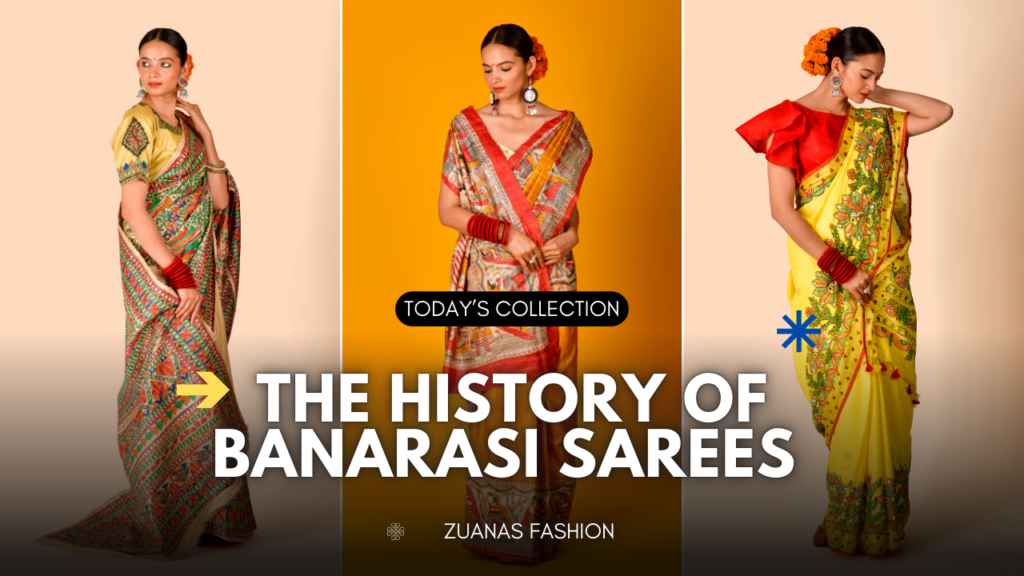
𝐈𝐧𝐭𝐫𝐨𝐝𝐮𝐜𝐭𝐢𝐨𝐧 – A Saree That Speaks of Royalty
India’s cultural fabric is woven with threads of heritage — and at the heart of it lies the legendary Banarasi saree. Revered for its rich silk, intricate zari work, and timeless appeal, the Banarasi saree isn’t just a garment; it’s a piece of art with centuries of history. In this post, we’ll explore the origin of Banarasi sarees, their evolution, and their iconic status in Indian fashion.
𝐓𝐡𝐞 𝐎𝐫𝐢𝐠𝐢𝐧 𝐨𝐟 𝐁𝐚𝐧𝐚𝐫𝐚𝐬𝐢 𝐒𝐚𝐫𝐞𝐞𝐬
The origin of the Banarasi saree can be traced back to the Mughal era (14th–15th century), when Persian motifs and weaving techniques were introduced to Indian artisans in Varanasi (also known as Banaras). The Mughal emperors, known for their patronage of fine arts, inspired the floral and foliate designs that are now synonymous with traditional Banarasi silk sarees.
These luxurious sarees were originally woven with pure gold and silver threads for the royalty and the elite, making them a status symbol for brides and aristocrats alike.
𝐓𝐫𝐚𝐝𝐢𝐭𝐢𝐨𝐧𝐚𝐥 𝐖𝐞𝐚𝐯𝐢𝐧𝐠 – 𝐓𝐡𝐞 𝐀𝐫𝐭 𝐁𝐞𝐡𝐢𝐧𝐝 𝐄𝐯𝐞𝐫𝐲 𝐓𝐡𝐫𝐞𝐚𝐝
Crafted by highly skilled artisans of Varanasi, each Banarasi saree is a masterpiece. It takes anywhere between 15 days to 6 months to complete one saree, depending on the design complexity. These sarees are woven on traditional handlooms, using techniques passed down through generations.
The four main varieties include:
- Katan (pure silk)
- Organza (kora, with zari and silk)
- Georgette
- Shattir
Artisans use real zari made from silver threads, and the motifs often depict Mughal-inspired designs such as bel, kalga, paisley, and floral patterns.
𝐂𝐮𝐥𝐭𝐮𝐫𝐚𝐥 𝐒𝐢𝐠𝐧𝐢𝐟𝐢𝐜𝐚𝐧𝐜𝐞 𝐨𝐟 𝐁𝐚𝐧𝐚𝐫𝐚𝐬𝐢 𝐒𝐚𝐫𝐞𝐞𝐬
Banarasi sarees are an integral part of Indian bridal trousseaus. Especially in North India, wearing a red or maroon Banarasi saree is a ritual for Hindu weddings. It symbolizes prosperity, fertility, and timeless tradition.
Even today, the Banarasi saree remains a popular choice among Bollywood celebrities, politicians, and fashion influencers for festivals, weddings, and cultural events.
𝐄𝐜𝐨𝐧𝐨𝐦𝐢𝐜 𝐚𝐧𝐝 𝐆𝐈 𝐓𝐚𝐠 𝐈𝐦𝐩𝐨𝐫𝐭𝐚𝐧𝐜𝐞
Recognizing its uniqueness, the Government of India granted the Geographical Indication (GI) tag to Banarasi sarees in 2009. This protects the identity of Banarasi weaving and prevents imitation products from being sold under the same name.
The handloom industry in Varanasi supports over 1 lakh (100,000) weavers, playing a crucial role in India’s textile economy.
𝐓𝐫𝐞𝐧𝐝𝐢𝐧𝐠 𝐓𝐨𝐝𝐚𝐲 – 𝐌𝐨𝐝𝐞𝐫𝐧 𝐓𝐚𝐤𝐞 𝐨𝐧 𝐓𝐫𝐚𝐝𝐢𝐭𝐢𝐨𝐧
Designers today are giving a contemporary twist to traditional Banarasi sarees by blending lighter fabrics, pastel shades, and minimalist motifs — making them appealing to younger brides and fashion-forward women.
Celebrities like Deepika Padukone, Vidya Balan, and Alia Bhatt have revived the charm of Banarasi weaves by donning them at red carpets and wedding events.
𝐂𝐨𝐧𝐜𝐥𝐮𝐬𝐢𝐨𝐧 – 𝐀 𝐓𝐡𝐫𝐞𝐚𝐝 𝐨𝐟 𝐓𝐢𝐦𝐞𝐥𝐞𝐬𝐬 𝐁𝐞𝐚𝐮𝐭𝐲
From its royal past to its modern-day glam, the Banarasi saree has stood the test of time. Whether it’s for your wedding, a festival, or a timeless addition to your ethnic wardrobe — owning a Banarasi saree is owning a piece of Indian heritage.
🛍️ Explore our exclusive Banarasi Saree Collection on Zuanas.com – where every thread tells a story.